
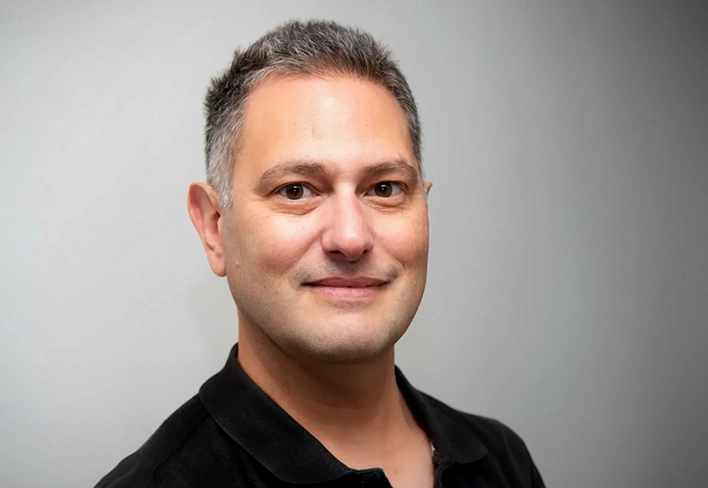
Psychoanalytic Psychotherapist
Adam Szmerling
20+ years of experience
I’ve worked in psychoanalytic psychotherapy for more than 20 years, with adults and couples dealing with anxiety, addiction and the strain of big life changes.
$89.50 back from Medicare on the $200 fee (you pay $110.50), for up to 10 sessions a year, with a GP Mental Health Treatment Plan
- In person
- Online
Expertise
- Couples therapy
- Schema therapy
- Psychoanalytic psychotherapy
People see me about
- Anxiety
- Addiction
- Relationship difficulties
- Binge drinking
- Porn addiction
- Self-sabotage
- Compulsive lying
- Agoraphobia
- Anger management
- Anorgasmia
- Binge eating
- Blushing
- Bulimia
- Cannabis addiction
- Childhood trauma
- Cocaine addiction
- Compulsive shopping
- Depression
- Emetophobia
- Gambling addiction
- Grief and loss
- Guilt and shame
- Health anxiety
- IBS
- Jealousy
- Night eating syndrome
- OCD
- Panic attacks
- Phobias
- Public speaking anxiety
- Self-esteem
- Sex addiction
- Sex phobia
- Shy bladder
- Social anxiety
- Stress
- Trichotillomania (hair pulling)
Accreditations

Qualifications

- Bachelor of Applied Social Science (Counselling)
- Graduate Diploma of Buddhist Psychotherapy
- Master of Social Work (MSW)
- Certificate of Lacanian Psychoanalytic Theory and Practice
- Clinical hypnotherapy training, Australian Academy of Hypnotic Science (1997)Adam no longer practises hypnotherapy.
- Golden Key Member
- Registered Clinical Psychotherapist, Psychotherapy and Counselling Federation of Australia (PACFA)
- Accredited Mental Health Social Worker (AMHSW)
Bio
Are you struggling with anxiety, relationship problems or emotional overwhelm? I’m Adam Szmerling, a Melbourne psychotherapist with more than 20 years of experience.
Born and raised in Melbourne, I’m an Accredited Mental Health Social Worker (AASW) and Clinical Psychotherapist (PACFA Reg. Clinical 21960).
I work with adults and couples who feel stuck in cycles of anxiety, addiction, relationship difficulties or overwhelming emotions, and who are ready to talk about what keeps those cycles going.
I founded Bayside Psychotherapy in 2009. It is now based in Highett, with sessions in person and online. The practice featured on Channel 7’s House of Wellness in a segment on fears and phobias.
My main approach is psychoanalytic psychotherapy, which looks closely at your thoughts and behaviours and what may sit underneath them. There is published research supporting it for people who commit to the process. I also use schema therapy when it fits.
As well as sessions in Highett, I offer secure, encrypted online sessions, so you can see me from anywhere in Melbourne or further away.
I listen closely to the words you use, and nothing you bring is judged. I draw on Western and Eastern traditions, including my training in Buddhist psychotherapy, depending on what suits you.
I work to create a space where you feel heard, understood and accepted for who you are.
In the news
Journalists and broadcasters have asked me to comment on AI and mental health, compulsive shopping, night eating and compulsive lying.






- The House of Wellness magazine, Spring 2026: The Rise of AI Anxiety
- ABC News, 2015: signs of a shopping addiction
- RPA eMagazine, 2025: Breaking the stigma around phobias
- SBS Food – on night eating syndrome
- triple j Hack, ABC – on compulsive shopping and oniomania
- Fashion Journal – on when shopping stops being a hobby
- Channel 7, House of Wellness – Bayside Psychotherapy on fears and phobias
- 4BC Radio – on compulsive lying
- The Sydney Morning Herald – on online therapy
- 9Honey – on shopping addiction
- News24 – on AI chatbots and mental health
More coverage: Bayside Psychotherapy in the media.
You can read more about my background and media work on my personal site, adamszmerling.com.au.
How I can help you
Psychoanalytic psychotherapy: Most people come wanting to stop something: the drinking, the checking, the arguments, the porn. In my experience what’s causing the trouble is usually also doing something for the person, and the first job is to find out what, in their own words.
I listen closely and say back some of what I hear. People often start to hear themselves differently. Knowing why you do something rarely stops it on its own. Saying it out loud, over time, sometimes does, and the change tends to show up later, in what you do.
This is slower work than a short course of sessions. For most people it runs months, sometimes longer. Sessions are face to face in Highett or by video. Later on I may suggest the couch, when the timing is right. If you want a structured program of exercises, another therapist here may suit you better, and reception can help you choose.
Schema Therapy: looks at how early childhood experiences can create patterns that affect your thoughts, feelings and behaviours as an adult. It combines ideas from cognitive-behavioural therapy, attachment theory, and psychodynamic therapy to help you understand and change harmful patterns. This approach can also help couples look at how they relate to each other.
Both approaches look at where symptoms come from as well as the symptoms themselves, and regular sessions over time matter.
Why work with me
It’s hard to know before a first session whether someone is the right fit. Here are some things about how I work:
- You say whatever comes to mind. I won’t tell you what you feel, and I won’t pass judgement on how you live.
- Your privacy is important to me. I use secure, encrypted platforms for online sessions to keep your information safe.
- I keep up with current research and methods. My main areas are Lacanian psychoanalysis, Buddhist psychotherapy, mindfulness and schema therapy.
- I supervise other therapists, and I keep up my own training.
- My own work is regularly discussed in supervision with senior psychoanalysts.
I only take on clients who are a good fit for my methods and are committed to the therapy process. This means being open to exploring how your past affects your present and being ready to work through difficult issues. Initial sessions are a chance for both of us to see whether this way of working suits you.
Understanding your needs
If you’re curious about why you think, feel, and act the way you do and are ready to explore these questions, my approach could be right for you.
Psychotherapy takes time. These patterns have usually been years in the making, and there are knots we don’t know about yet.
I know symptom relief matters to you. Focusing too hard on symptoms can make them worse, a bit like trying to fall asleep: the more you try, the harder it gets. So we talk about what sits underneath, and in our experience relief often comes in its own time.
In our experience, a pattern that hurts can also be doing a job, often protecting a person from something they don’t yet have words for. That’s why stopping by willpower alone can be so hard. In therapy, we listen for what the pattern is doing, at a pace that suits you.
Getting started
Therapy works best when you can come regularly, so we keep the thread from one session to the next, and when you’re willing to say what’s hard to say.
If that sounds like you, I’d love to help. Here’s how to get started:
Book your session: call reception on (03) 9557 9113 or book online.
Prepare for your session: For online appointments, I’ll send you a secure form to fill out and a link to our virtual waiting room. For in-person appointments, you’ll receive an email confirmation and an intake form to complete before your visit.
You can claim Medicare rebates with a valid Mental Health Treatment Plan (MHTP). Bulk-billing is not available. You or your GP can email me, or fax your referral to 03 9124 1522.
I also accept NDIS self-managed and plan-managed clients on a case by case basis. Please contact me before booking if you are an NDIS participant.
Is it time to work on you?
Book your first sessionFrequently Asked Questions
How do I know if Adam can help me?
The first session is an assessment for both of you. Adam listens to what brings you and how you would like things to change, and you get a feel for how he works. Seeing him about a concern he treats doesn’t mean ongoing therapy will be offered. That decision comes after the assessment, once you both know whether psychoanalytic work suits you.
Does Adam give advice?
Rarely, and for a reason. Most people arrive having had plenty of advice, and it hasn’t changed what they do. What tends to change things is noticing the words you keep using about a problem, the ones you say every week without hearing them. Adam listens for those and brings them back at the right moment, sometimes weeks later, so you can see the pattern underneath for yourself. A link you make yourself may change what you do. A link someone hands you tends to get filed away. Where he does speak plainly is safety, and practical things like a GP letter.
How long are therapy sessions?
Sessions are 50 minutes. How often we meet depends on you. Weekly sessions are common when we are looking at root causes, and we agree the rhythm together. Some people notice shifts early, and deeper change often takes months or years of regular sessions. With a Mental Health Treatment Plan (MHTP), Medicare gives a rebate for up to 10 sessions a calendar year, and in those sessions I use the focussed psychological strategies Medicare funds. Ten sessions rarely scratch the surface of psychoanalytic work, so we talk through a pace that suits you.
Do you offer evening or weekend appointments?
Yes, I offer evening and Saturday appointments. Availability changes from week to week, so check the times on this page and book online, or call reception on (03) 9557 9113.
What is your approach to confidentiality and privacy?
Your privacy matters to me. I follow Australian and Victorian privacy law, and what you share stays confidential unless the law requires otherwise. Online sessions run on secure, encrypted platforms, so wherever you are you can speak freely about anxiety, shame or anything else.
Where are your sessions located?
I see people in person at our rooms in Highett, in Melbourne’s Bayside area. If you are not local, I offer secure online sessions across Melbourne and beyond.
Do you provide crisis intervention or emergency support?
I don’t provide crisis or emergency support. My work looks at issues like anxiety, guilt, compulsive lying or relationship patterns over time. If you are unsafe right now, call Lifeline on 13 11 14, or 000 in an emergency. When you are ready to look at what is going on underneath, I am here.
What is your policy on missed or cancelled appointments?
Your session time is set aside for you, so please give at least three full working days’ notice if you need to cancel or reschedule. Late notice is charged at the full fee under our cancellation policy. If you are unwell, we can often switch to an online or phone session instead.
Do you work with other health professionals, such as psychiatrists or GPs?
Yes. With your consent, I work with your GP, psychiatrist or other professionals, especially if you have a Mental Health Treatment Plan (MHTP). This can help in more complex situations, and my psychoanalytic view sits alongside theirs. I also work long term with some people living with serious, longstanding mental health conditions, alongside their psychiatrist or GP, where it is safe to do so.
What is the price?
Sessions are $200 for 50 minutes. With a Mental Health Treatment Plan (MHTP) you can claim a Medicare rebate of $89.50 a session. You pay the full fee when you book and claim the rebate afterwards; bulk billing isn’t available. I also see NDIS self-managed and plan-managed participants case by case, so please get in touch before booking. You can book your session here.
Book with Adam
Your first session is a chance for you both to see whether this way of working suits you. Choose a time for a session in Highett or by video, including evenings and Saturdays.
- Online or in person
- Confidential, within legal limits
- No need to speak to anyone to book